
Engineers Invent Revolutionary Metal That Will Make Unsinkable Ships a Reality
Published Feb. 10 2026, 9:42 a.m. ET

Multiple unsinkable metal tubes linked together in a raft formation could be the basis for the ships, buoys, and floating platforms of the future.
Researchers have developed a technology that will ensure no ship ever sinks. This technology is inspired by the diving bell spider (Argyroneta aquatica). The ambitious methodology is a material that captures air bubbles through its superhydrophobic properties. A team of researchers incorporated a divider in this supposed metal, which strengthens its resilience in water. This quality has made them suggest scaling these metals to align with equipment like rafts, so that they can develop unsinkable structures in the future. Findings regarding this technology have been published in the journal ACS Applied Materials & Interfaces and Advanced Functional Materials.
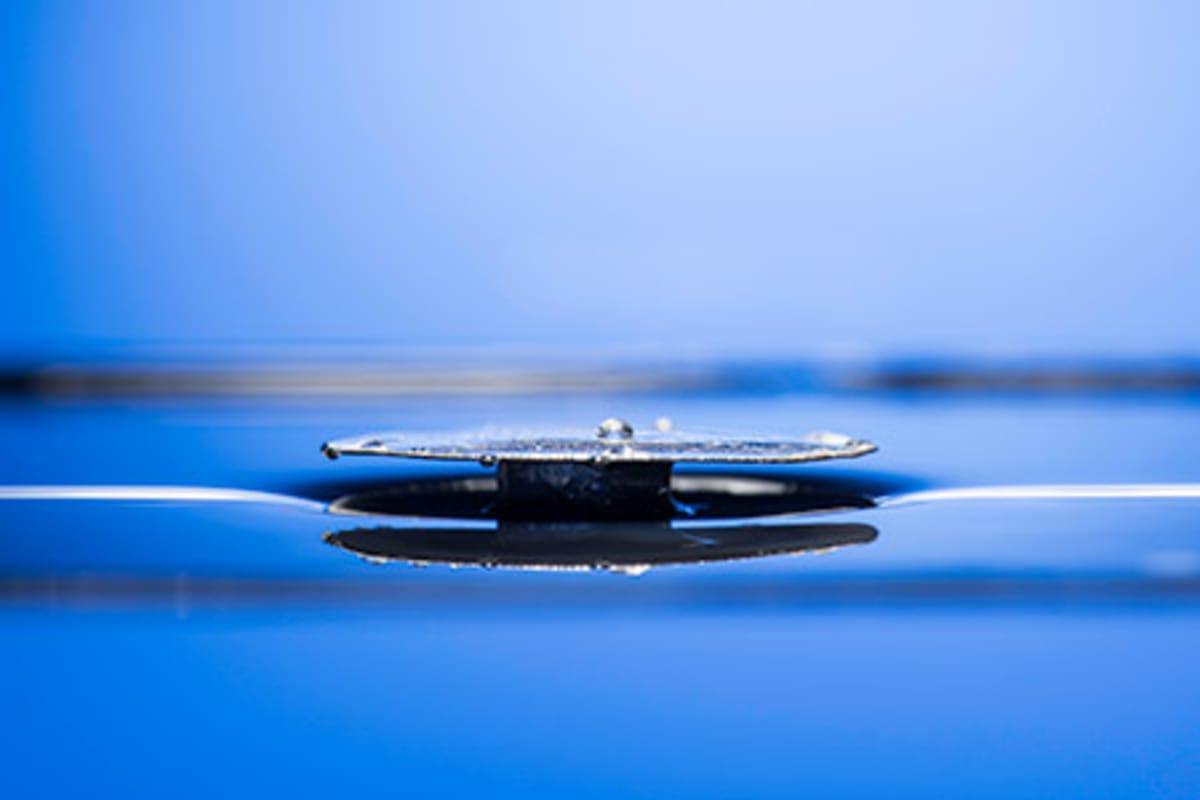
Superhydrophobic metallic structure floats on the water surface in the Guo Lab.
The diving bell spider is the only member of its genus, “Argyronetidae,” which lives entirely in the waters, per Popular Mechanics. Its arms and abdomen are superhydrophobic (SH), which allows it to bring breathable air bubbles into its dome-shaped “diving bell.” These bubbles are taken from the surrounding environment and fulfill the spider’s breathing needs despite being underwater. For years, Chunlei Guo has been investigating these superhydrophobic qualities to understand if such features can be cultivated in man-made materials. Guo and his team have come up with the most advanced prototype to make it possible.
This finding is revolutionary, as it would mean researchers have an unsinkable material in their hands. Superhydrophobic technology on man-made materials was first demonstrated by Guo and his team in 2019, according to the University of Rochester. They presented two superhydrophobic disks sealed together, which facilitated buoyancy. It was a breakthrough presentation, but there were several drawbacks. The disks could lose their ability to float if inserted into water at extreme angles. The current prototype is not only an improvement on the previous design, but is also simplified in approach.
The process explained in the study was applied to ordinary aluminum metal tubes of varying lengths. The interiors of these tubes were etched to create micro- and nano-pits on the surface. By doing this, researchers hope that the metal tubes will turn superhydrophobic. Being superhydrophobic means having the capability to repel water and remain dry. Such metal tubes will be able to float on water, regardless of their depth or the damage they have endured.
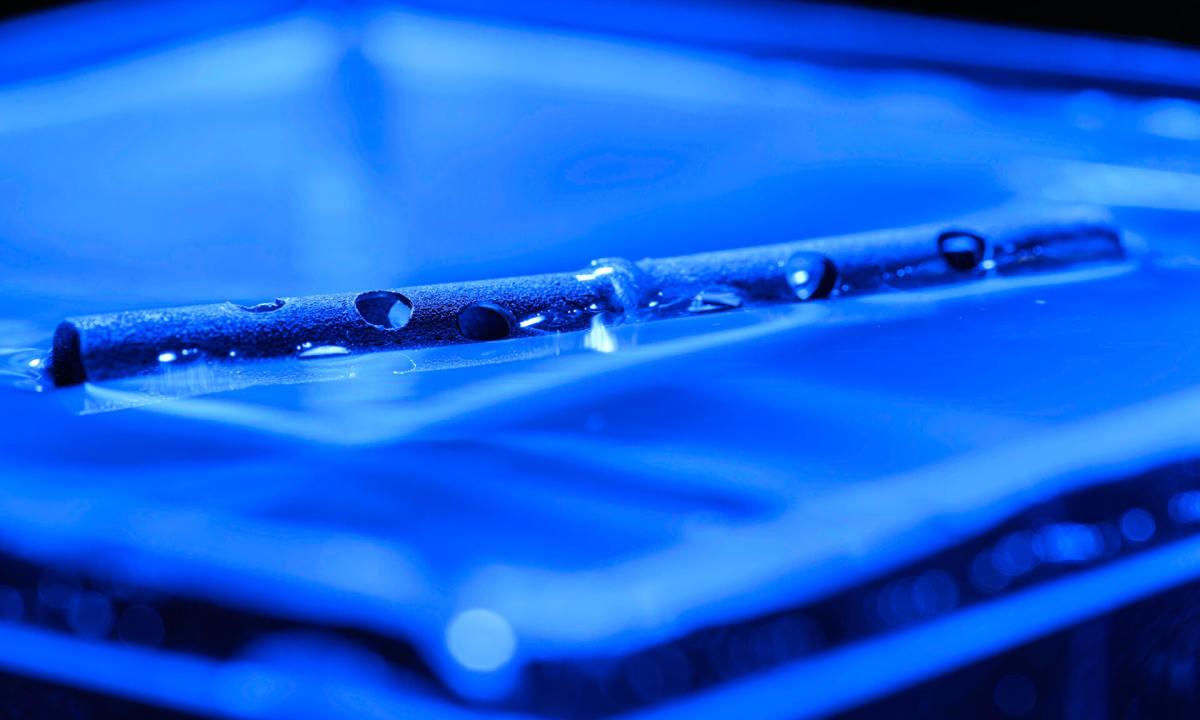
Unsinkable Metal Tube
Similar to the diving bell spider, after entering the water, the superhydrophobic surface of these tubes captures a stable air bubble. This bubble is key to the entire process, as it prevents the entity from being waterlogged and ultimately sinking. Fire ants also use a similar process to create floating rafts with their hydrophobic bodies. To ensure that the metal tube sustains this floating capability, researchers incorporated a divider into the mechanism. This divider, at the center of the tube, traps an air bubble inside, even if the tube is inserted vertically into the water.
These tubes displayed more floating capability in water than disks, even against turbulent conditions. “We tested them in some really rough environments for weeks at a time and found no degradation to their buoyancy,” shared Guo. “You can poke big holes in them, and we showed that even if you severely damage the tubes with as many holes as you can punch, they still float.” Researchers speculate that multiple tubes can be brought together to formulate ships, floating platforms, and buoys. The rafts created with such metals could also contribute to enhancing renewable energy prospects with their water harvesting capabilities.