
Development Projects Threaten Yellowstone's Golden Eagles. A Unique 'Backpack' Aims to Protect Them
Published Feb. 18 2026, 8:19 a.m. ET

Golden eagle capture: fitting the eagle for a GPS backpack.
People have peeked into how the golden eagle population at Yellowstone National Park is monitored. National Park Service (NPS) photographer Jacob W. Frank captured a scene featuring bird biologist David Haines and his team fitting a golden eagle with a GPS backpack, according to Buckrail. The team was measuring the bird’s talons, beak, wings, and tail feathers. Also, they were placing bands on the eagle's ankles to identify the bird during the evaluation later. Officials at Yellowstone National Park have been investigating their golden eagle populations since 2011. The organization started using GPS for monitoring reproduction in 2018.
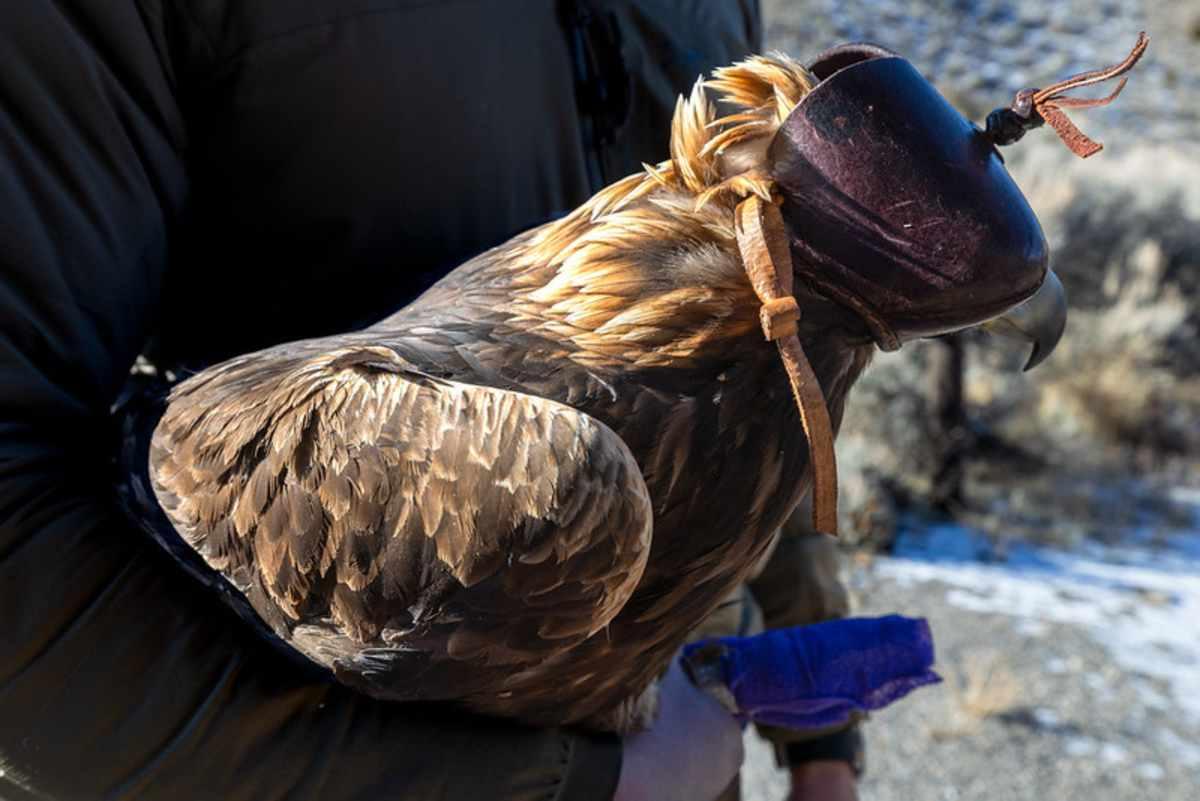
Golden eagle capture: eagle with hood
Yellowstone National Park claims that telemetry via GPS instruments allowed experts to understand the golden eagle’s annual reproductive rates, survival rates, diet, and movement across the area. The group gathered insights at both broad and fine scales of the landscape. Officials are keen to keep a close eye on the golden eagle population, as they are facing challenges worldwide due to energy development projects and increased human activity. Some examinations suggest that these eagles are exposed to toxic levels of lead outside the park. The eagles interact with these lead traces in carrion remnants. Many such actions have dwindled the numbers of golden eagles, leading to population restoration efforts in parts of Wyoming.
Yellowstone National Park has the honor of hosting a high density of golden eagles. The species is spread across 30 different territories in the park. It is crucial to protect them, and therefore, an exhaustive monitoring of their situation in the National Park is necessary. Researchers have determined golden eagles (Aquila chrysaetos) as a North American species of conservation concern, according to the Buffalo Bill Center of the West. The investigation to date has revealed that a relatively dense local population of the species is present across the northern range of Yellowstone. Some sad updates have also arrived, like low average reproductive rates over the last 12 years. Experts believe that factors like recovery of large carnivores, extreme weather, and variation in prey availability are limiting the birds’ reproductive capacity.
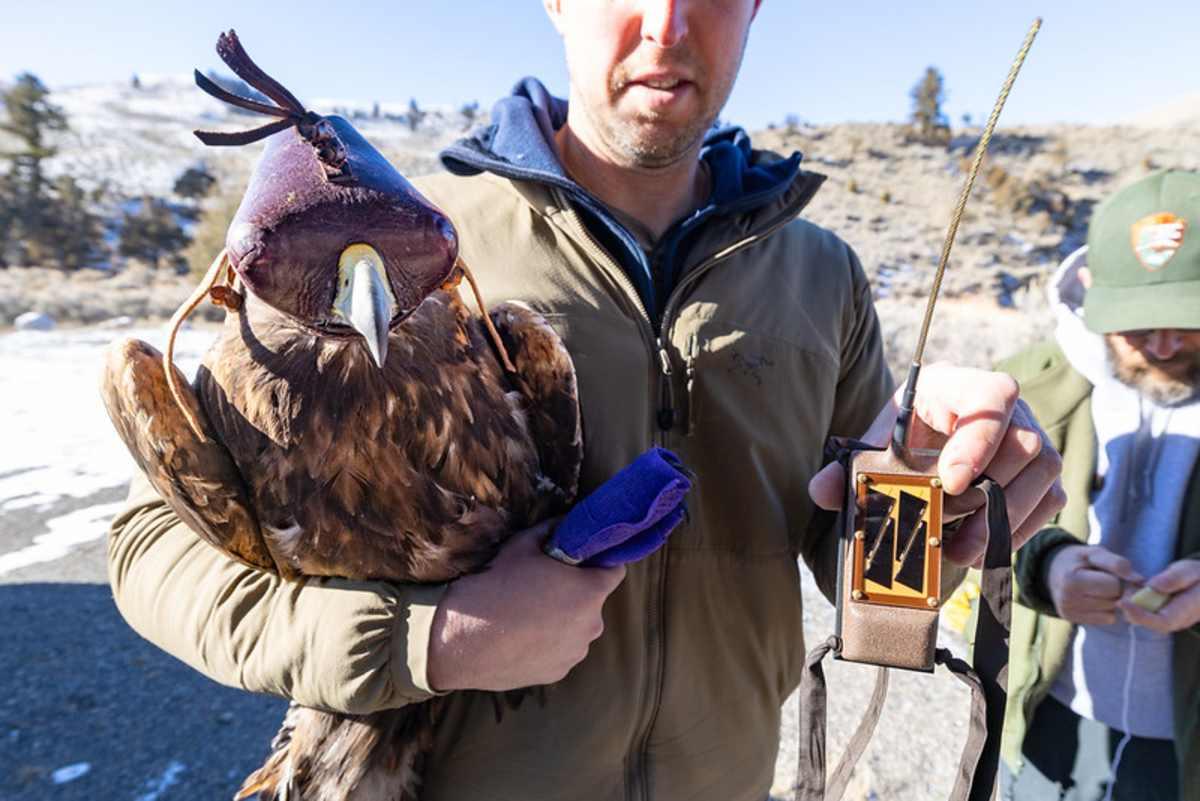
Golden eagle capture: GPS backpack to be attached
Surveys indicate that territory occupancy rates for the golden eagle were consistently high (100%) from 2011 to 2023, according to NPS. However, low average productivity was exhibited by the nests in these territories. Researchers believe it happened due to infrequent nesting attempts and low nest success. In 2023, officials monitored 23 occupied territories until the end of the breeding season. These territories contained 12 occupied nests, of which six were successful in fledging seven young golden eagles. This finding is valuable, as it implies that the Yellowstone golden eagle population may need help from outside immigration for sustenance.
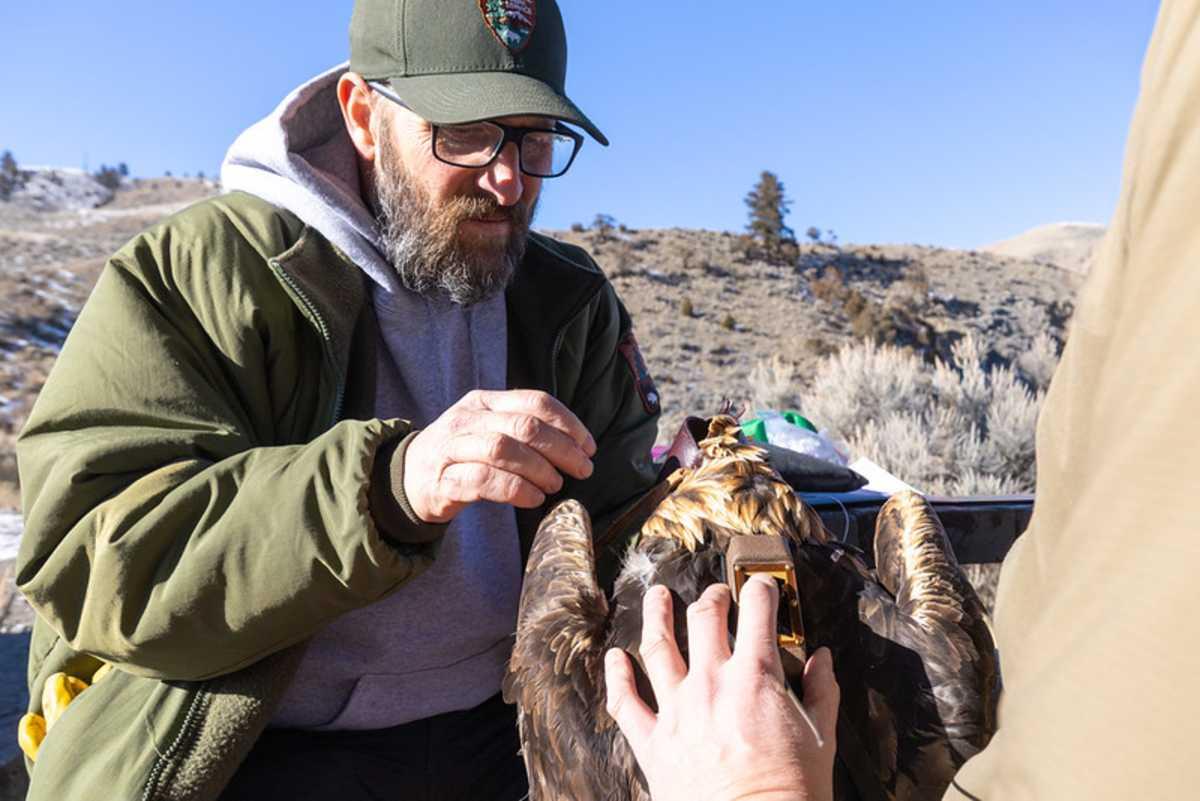
Golden eagle capture: fitting the eagle for a GPS backpack
Officials have already examined temporal and spatial components related to the habitat of the golden eagle in Yellowstone National Park. Experts now want to understand more about the bird’s survival rates and other life-history stages to shed light on the local population’s condition. Along with the golden eagle, 19 other breeding raptor species live in Yellowstone National Park, according to Yellowstone Forever. Many of them are being observed by experts to maintain their numbers. Telemetry is also being used to monitor the common raven and the Clark’s nutcracker population in Yellowstone National Park.