
Apparently, Mount Everest Makes Strange Noises at Night and Scientists Finally Know Why
Published Feb. 23 2025, 7:46 a.m. ET

A man using a torch to climb the mountains at night.
Mount Everest is the highest point on Earth, standing tall as a symbol of might and endurance. The Himalayan beauty perched on the borders of Nepal and Tibet has a mystique like no other but if you look beyond the beauty, the peak tests human limits. A natural wonder in daylight, Mt. Everest can be something of a nightmare at night. Researchers have tried to unravel the mystery behind the loud cracking and booming noises that engulf the area at night. A team of scientists from Japan trekked all the way through the Nepalese Himalayas to gain firsthand knowledge of the eerie noises emitted by the Himalayan peak, per a study published in the journal Geophysical Research Letters.
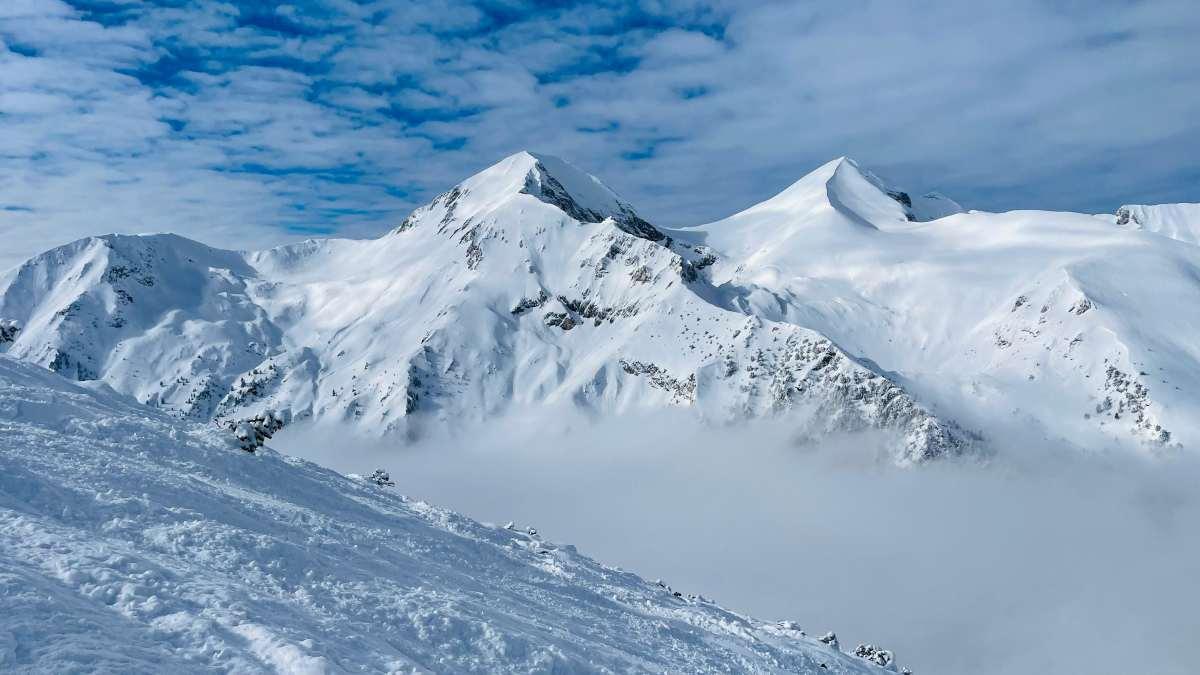
Mountains covered in snow.
Evgeny Podolskiy, lead author and glaciologist at the Arctic Research Center at Hokkaido University in Japan figured out a reason for the sounds specifically heard at night. While the noises occur throughout, their intensity increases at night as the temperatures drop. “Local ice turns out to be very sensitive to this high rate of change,” the expert noted in the 2018 study. He and his team were originally there to test the seismic activity of the Trakarding-Trambau glaciers and traveled to a glacier five kilometers above sea level.
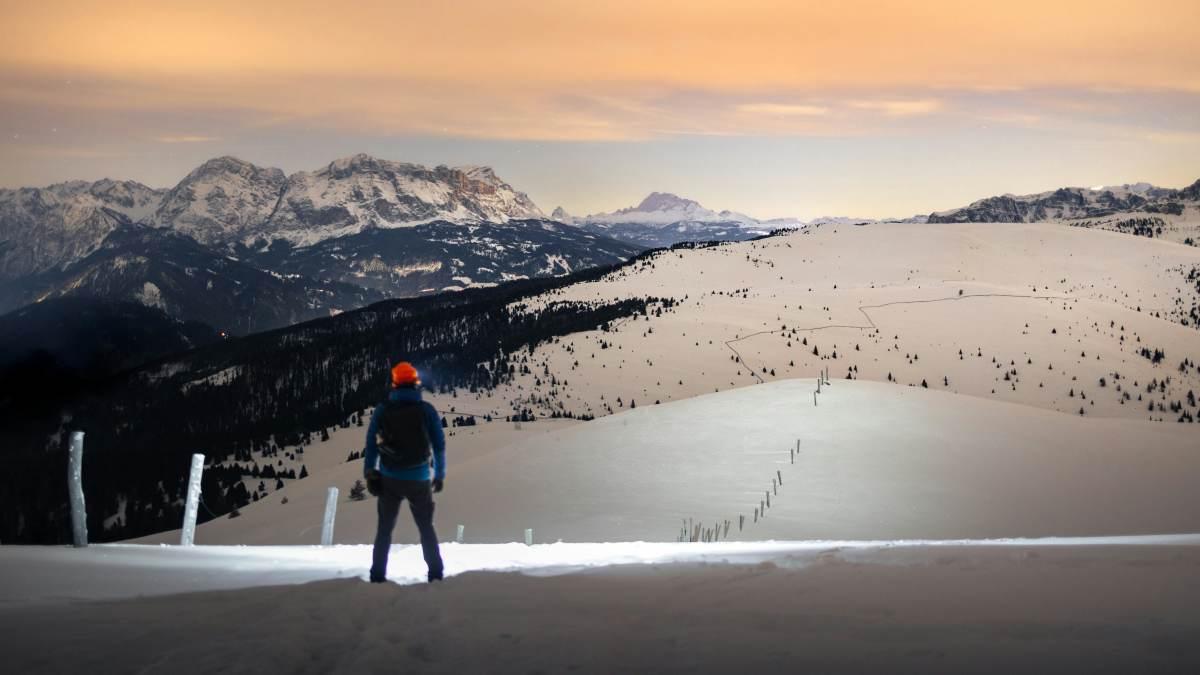
A mountaineer climbing a snow-covered peak at night.
Podolskiy was initially enamored by his new and “magnificent” work location but the chilling noises eventually got to him. As night fell, the scientists were left shaken by the deafening sounds of rocks crashing and ice cracking in the vast glacier. “We hear this loud boom…we noticed that our glacier is bursting, or exploding with cracks at night,” Podolskiy recapitulated. The noises were consistent throughout the three weeks of their stay at the glacier occurring specifically during nighttime. Through analysis of the seismographic data, it was found that the sharp and unpredictable drops in temperature at night caused due to the glacier's high altitude contributed to the strange sounds.
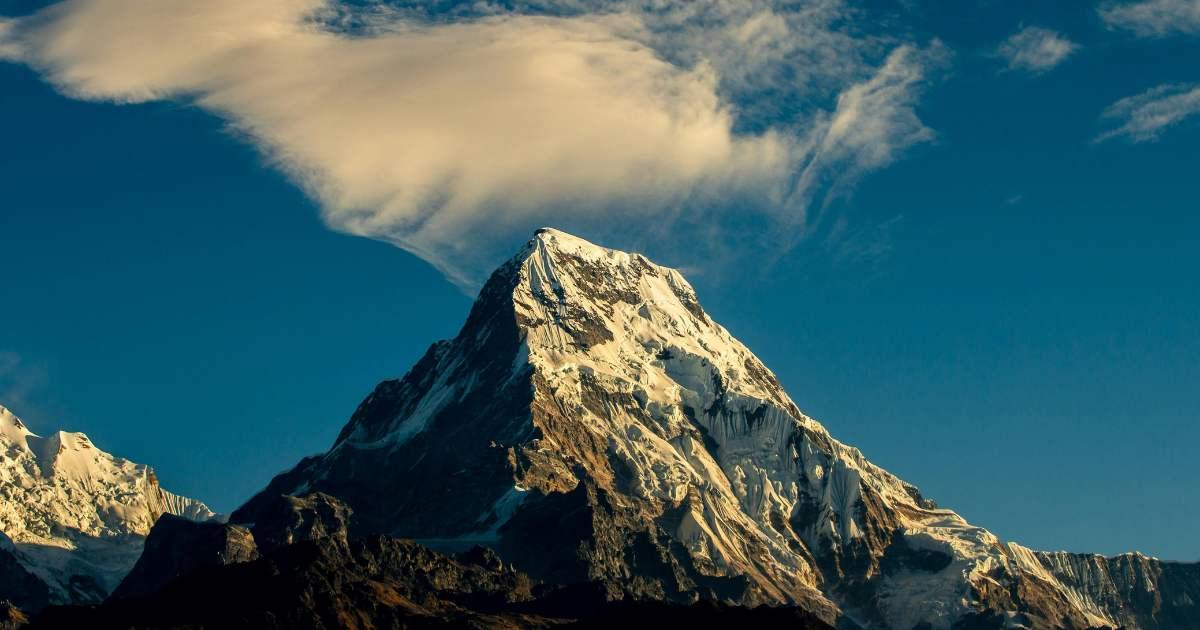
A snow-covered mountain peak reaching upto the clouds.
An expedition leader, Dave Hahn also attested to the insane and loud noises that deprived him of sleep in the Netflix documentary, Aftershock: Everest and the Nepal Earthquake. It is based on the catastrophic earthquake that hit Nepal in 2015. Before that, Hahn, who had already clocked 15 summits to Everest, gave an account of what it was like to sleep on the glacier. “It’s tough to sleep,” he said, as reported by Unilad. Besides the apprehension of climbing the tallest mountain, Hahn revealed, that the spine-chilling sounds of the night often go to him. “You can hear the glacier that you’re sleeping on - and that you’re going to climb through - you can hear it popping, you can hear ice and rock crashing down in various places around the valley,” the expedition leader explained.
According to Brittanica, Mt. Everest flaunts an elevation of 29,032 feet and is revered by both Nepalese and the Tibetan community. The mountain is composed of multiple layers of rock folded back on themselves, created by the collision of the Indian-Australian plate and the Eurasian plate about 40 to 50 million years ago. Originally referred to as Peak XV, the peak was renamed for Sir George Everest, British surveyor general of India from 1830 to 1843. Mt. Everest was not recognized as the tallest peak until the Governmental Survey of India established its height in 1852.