
Amazon's Rain-Making Power Fuels Farms and Water Supplies. Experts Value It at $20 Billion a Year
Published Feb. 18 2026, 6:20 a.m. ET

Misty haze of rain clouds hovering above the Amazon rainforest.
For someone to receive a cheque with this number—$20,000,000,000—scrawled on it, it must have taken a tremendous lot of hard work. Now imagine doing this much work without receiving any credit or payment for it. The Amazon rainforest humbly generates this much rain every year, providing amazing rain services year after year. Its services, however, have rarely been accounted for by policymakers. The Amazon and its fellow forests remain bereft of the credit they truly deserve for their consistent, rain-showering services. Scientists from the University of Leeds have stepped up to recognize these smart, safeguarding forest folks by documenting their services with statistics in Nature’s portfolio journal Communications Earth & Environment.
Not just Amazon, but the entire nature is a grand corporation that brilliantly manages a suite of ecosystem services, from pollinating crops to purifying the air and producing rain. Not too different from a potato chip factory, this natural corporation has an arabesque of mini-corporates, including plants, animals, organisms, trees, and forests that collectively interact to provide these services and manage the planet. Among these employees, the tropical forests are known for their rain-generating services.
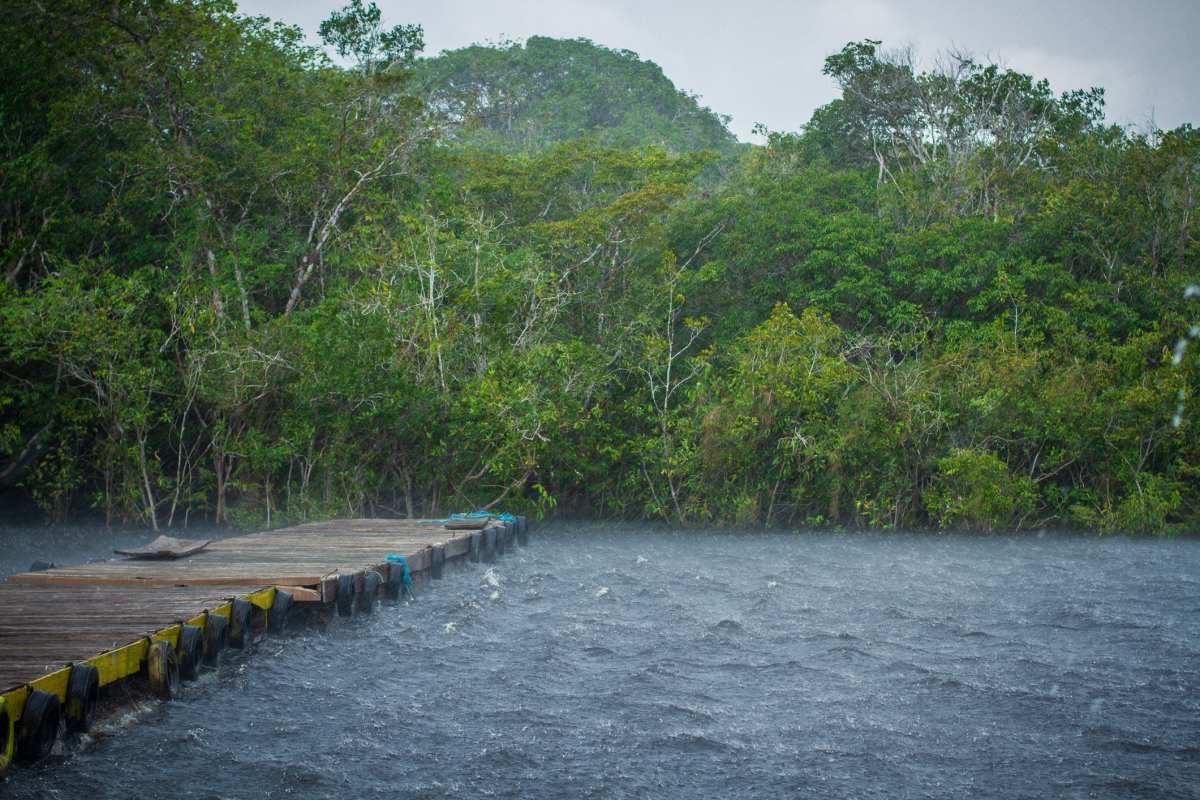
Amazon rainforest in the rain.
Every tree in a tropical forest is a straw that slowly, quietly slurps up water from the soil. After sipping it, it releases vaporous water farts through tiny pores in its leaves. These vapors rise into the atmosphere and get clumped with particles of gases, aerosols, pollen, and assorted bacteria lurking in the air. Together, they form puffy clouds, and when the conditions are right, these clouds burst, releasing torrents of rain upon the very forests that created them. These unassuming services underpin everything from agriculture to water security and energy production.
Lately, scientists realized that humans have been taking these services for granted. With this study, scientists were aiming to bring these tropical forest factories the recognition they deserve by attributing their rain production with monetary values. Research estimated the value of this ecosystem service at billions every year. The Amazon alone generates income worth $20 billion in Brazilian states, which are highly dependent on it for water supply.
For every 1 square meter (10.76 square feet) of each tropical forest, 240 liters (63.4 gallons) of rain are created every year. And being the star performer, Amazon creates 300 liters (79.25 gallons) per square meter (10.76 square feet). Scientists used these figures to do a little bit of math. Calculations estimated that for each 1.5 football pitches of a tropical forest, 2.4 million liters (634,013 gallons) of rain are generated per year, enough to fill an Olympic-sized swimming pool or a lifetime of daily showers for a person.
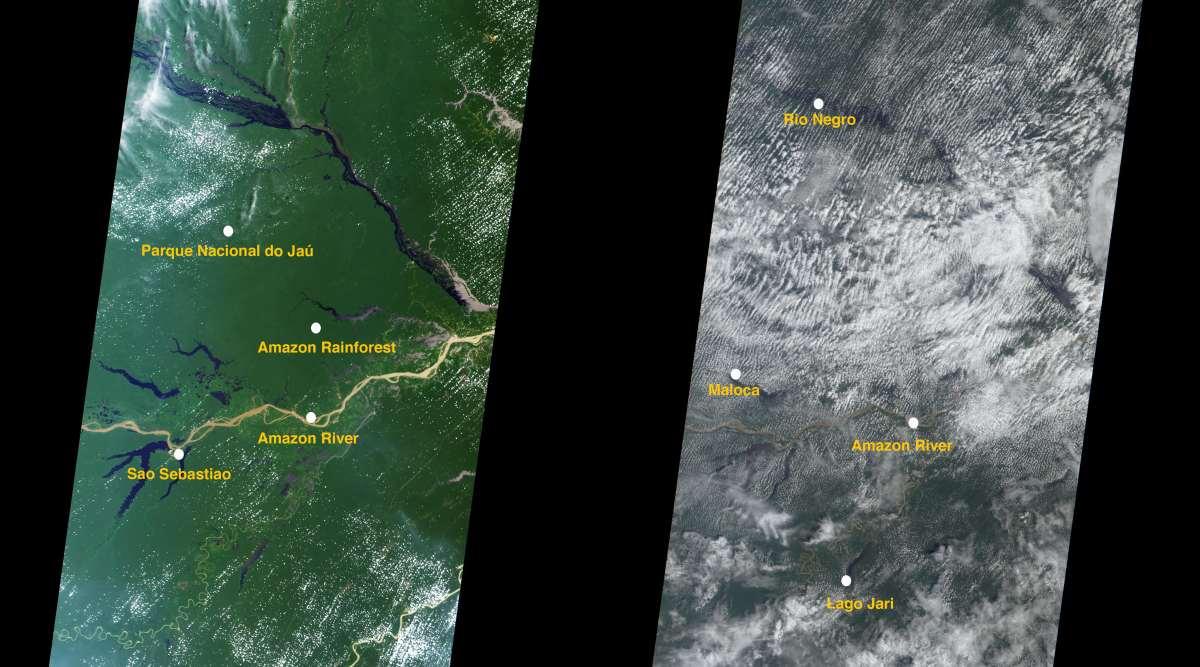
These images contrast two predominant seasons of the Amazon Basin: dry and wet. The image on the left was acquired July 24, 2021 (during the dry season), and the one on the right is from December 31 (during the wet season).
Lead author Dr. Jess Baker said in a press release that this is the “most comprehensive and robust evidence to date of the value of tropical forests’ rainfall provision.” Numbers, she highlighted, always speak better. “Demonstrating the financial benefits that tropical forests provide will unlock investment and strengthen arguments for forest protection,” she added. Baker and her fellow scientists arrived at these statistics after a detailed investigation conducted from a combination of satellite observations, assessment through climate models, and economic evaluations.
In the past few days, these natural service providers have been facing extreme interference and disturbance from humans who tend to disrupt their clockwork and processes with activities like deforestation, forest fires, and unrestrained urbanization. At a time when international climate leaders are aspiring to reverse the forest loss, this study comes as a motivation. By linking financial payments to environmental outcomes, scientists can better ensure the protection and restoration of tropical forests, whilst also showing them the care they deserve for their fantastic rain-making services.