
A Whale Spotted in Boston Looked Oddly Familiar — Turns Out, It Swam 3,000 Miles From Ireland
Updated Dec. 4 2025, 10:14 p.m. ET

A person on a kayak is looking at a whale nearby.
On November 19, Ian Schosberg of the Center of Coastal Studies was conducting an aerial survey 25 miles east of Boston, when he noticed a whale gliding in the waters below him. The whale looked familiar. When he looked closer, a unique scarring pattern materializing on the right side of its head caught his attention. The mystery was solved when he conveyed the details of this mammal to the scientists of the New England Aquarium. Turns out, it was the same male right whale that had been spotted off the coast of Ireland in July 2024 by the Irish Whale and Dolphin Group. The familiar candidate was an endangered North Atlantic right whale, and finding it in Boston made Schosberg realize that it had travelled almost 3,000 miles across the Atlantic Ocean, a distance rarely documented.
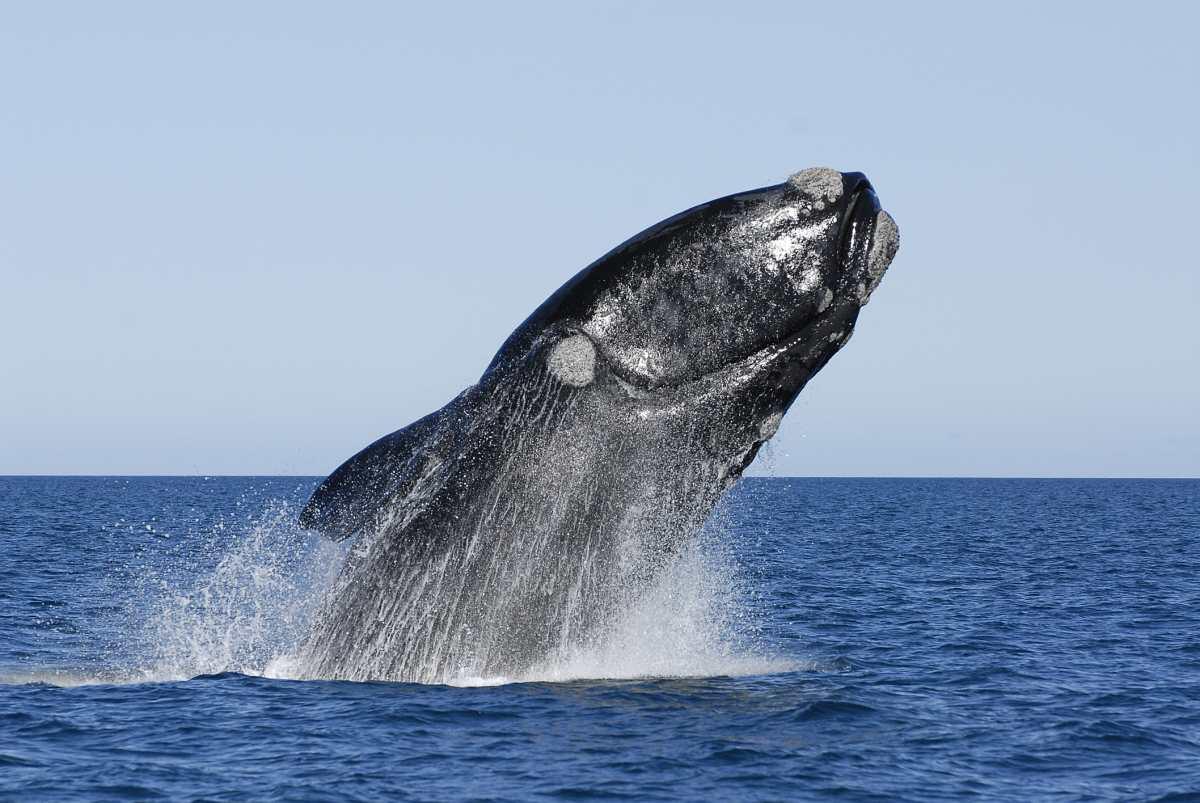
Right whale jumping out of the surface, splashing water
In conversation with CBS News, Schosberg recalled that a day after he sent the whale’s photo to the aquarium, the scientists there sent him a potential match from their catalog. “I was shocked,” he exclaimed, adding that, “I remembered the Irish whale sighting from July 2024 and how we'd tried to match that to a known individual in the catalog without success."
The whale was first spotted in Ireland’s Donegal Bay. And although this is a rare episode where a North Atlantic right whale has travelled to the eastern Atlantic and back, it becomes the “first documented case of a right whale initially sighted in the eastern North Atlantic and later resighted in the western North Atlantic,” the aquarium writes.
According to the National Oceanic and Atmospheric Administration, these whales are as long as 52 feet and weigh up to 140,000 pounds. The agency states that the whales can be identified by their stocky black bodies that lack dorsal fins and their V-shaped blow spouts. Their bellies are usually all black or display irregular white patches. In conversation with @museumofscience, Peter DeCola of Stellwagen Bank National Marine Sanctuary, shared that there are only about 350 of them left in the North Atlantic, with females being only 70 or so.
While the thick blubber on their skin makes them incredibly buoyant, it also makes them vulnerable to threats and hunting, the most common threats being ship strikes and entanglement in fishing gear. Typically, during winter, the pregnant females migrate south to give birth to their calves in shallow, protected, warm waters off the southeastern U.S., only to return in the summer to feed on the phytoplankton residing under the ice.

Whale swimming in shallow water
This rare episode, the aquarium notes, suggests that historically important right whale habitats in the eastern Atlantic may still hold value, and these “critically endangered whales are searching widely for places to feed and survive.” Elsewhere, residents of Boston are writing welcome notes for the whale, celebrating this rare “trans-Atlantic connection.”