
A Strange ‘Quacking’ Sound Was Heard Deep in the Ocean — Experts Think It Could Be a Conversation
Published Feb. 25 2025, 8:46 a.m. ET

Researchers dive into the ocean to explore a strange phenomenon on the ocean floor.
Scientific advancements in the present greatly derive from historical findings, often unexplained, and the occurrence of the “Bio-Duck” is one fine example. In 1982, researchers from New Zealand explored the marine acoustics of the Southern Ocean and captured a mysterious noise originating in the South Fiji Basin. The sound strangely resembled a duck’s quack and thus, named accordingly. The sound was heard as four short bursts of frequencies, repeatedly emitting from the deep ends of the ocean encouraged the experts to rule it as biological, according to the Acoustical Society of America.
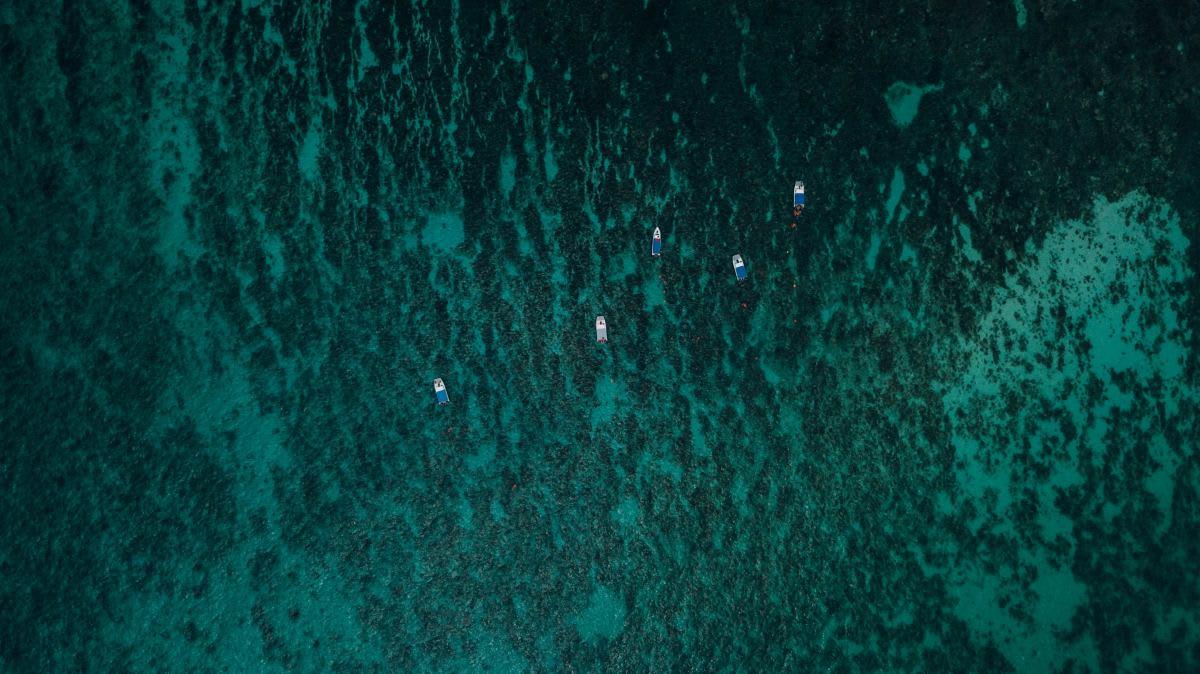
A satellite view of an ocean.
The unidentified sounds were recorded at a time when acoustic technology was not as efficient as today. In some theories, the quack-like noises were attributed to Antarctic Minke Whales prevalent in the southern waters, with loosely supported evidence, per the report. However, modern scientists were not convinced by the primitive conclusion as there was no real-time information on Minke Whales emitting those noises. Therefore, Ross Chapman, a researcher at the University of Victoria decided to reconstruct the knowledge on the Bio-Duck and reopened the study in late 2024.
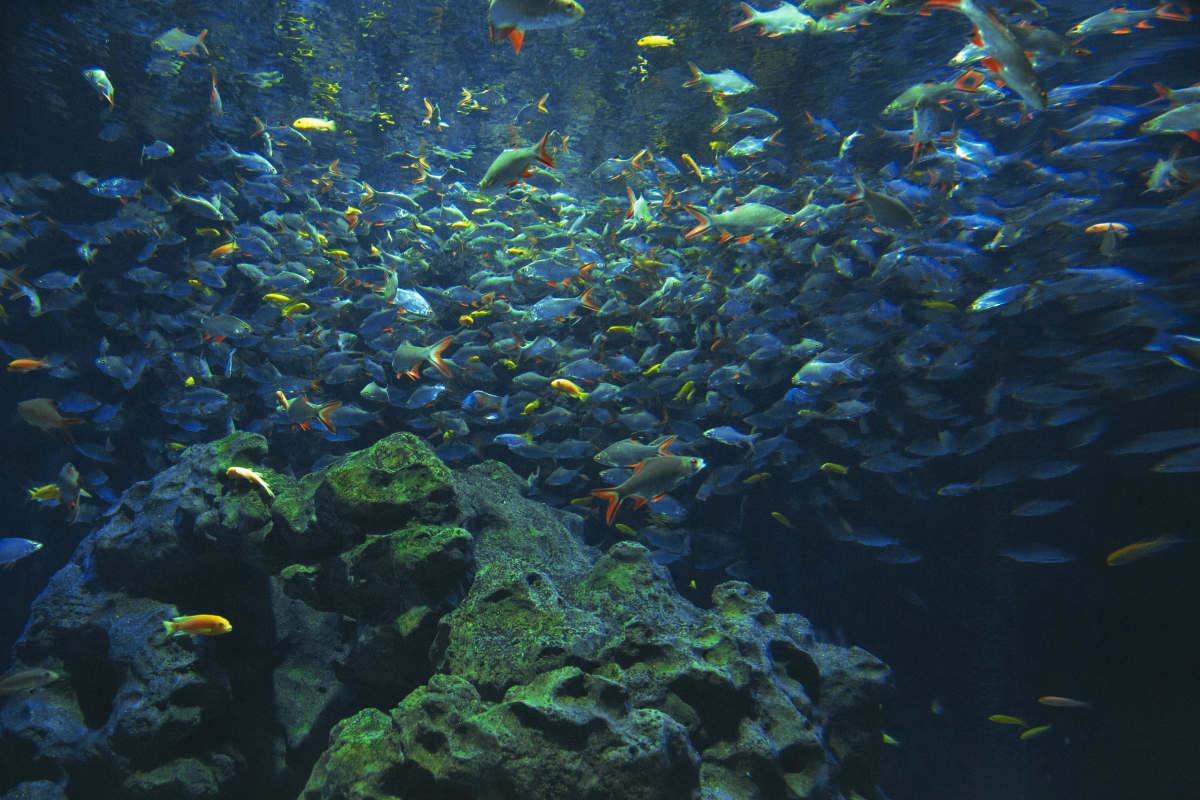
Underwater ecosystem
“The sound was so repeatable, we couldn’t believe at first that it was biological. But in talking to other colleagues in Australia about the data, we discovered that a similar sound was heard quite often in other regions around New Zealand and Australia,” Chapman said, per the report. Upon analysis of the old recordings from 1986, he was thrilled to find new layers of information about all kinds of marine sounds that suggest greater knowledge about marine mammals and their behaviors.
Retro audio equipment old tube amplifier radio illuminated scale.
Chapman added, “You have to understand that this type of study of ocean noise was in its infancy in those days. As it turned out, we learned something new about sound in the ocean every day as we looked further into the data—it was really an exciting time for us.” Unfortunately, despite the impressive technological upgrades, scientists are still baffled by the strange noises discovered in the Fiji Basin. While the marine creature, likely a deep-sea dweller, was undetermined, Chapman explained that the notes sounded more like a conversation. To ascertain the source, the new study collected fresh data off the ocean floor through an acoustic antenna, made of an array of hydrophones towed behind a ship.
While the source of the noises was still hidden, the researchers identified the direction of it. They were surprised to find that there was not one, but multiple sources of the sounds captured at different places in the ocean. “The most amazing thing was that when one speaker was talking, the others were quiet, as though they were listening. Then the first speaker would stop talking and listen to responses from others,” the researcher revealed. Later, Chapman joked that they could have been talking about dinner or about the “crazy” ship carrying the acoustic antenna.
The expert also presented his work and analysis of the quack sounds at the virtual 187th Meeting of the Acoustical Society of America. The bid to characterize the soundscape of the ocean to better understand the marine environments of the world’s oceans in 1982 led scientists to an even more striking mystery that somehow remains unsolved to date. Nevertheless, the Southern or Antarctic Ocean has been an enigma that humankind still remains in awe of. All the technology in the world, and yet, a vast chunk of the ocean is still unexplored along with the diversity of species living in it.