
112-Million-Year-Old Insects Trapped in Amber Offer Rare Glimpse Into Prehistoric Life
Published Jan. 13 2026, 5:00 a.m. ET

Fossilized dead bodies of bugs frozen in time inside amber pieces from trees dating millions of years ago
About 112 million years ago, dinosaurs stamped their gigantic feet on carpets of rain-drenched leaves, and troops of notorious blood-sucking bugs emerged from the towering conifers to feast on their blood. However, the trees they landed on had developed an unusual defense strategy to shoo them away. The moment a bug landed on a tree branch or latched onto its trunk, the tree secreted a sticky resin that enveloped the bug's body. The bug became glued to the tree, unable to pull itself away. Over time, as the resin dripped from the branches, its honey-colored dollops got frozen in time, entombing the dead bodies of these tiny bloodsuckers. While the asteroid wiped out those dinosaurs, these bugs remain preserved in time for millions of years, until scientists recently uncovered their remains, as documented in the journal Communications Earth & Environment.
This is the first large discovery of insect-laden amber in South America, and it gives great insights into Cretaceous life in the Southern Hemisphere. The trove of frozen bugs was unleashed from the Genoveva quarry in the Napo region, Canton Archidona, Ecuador. The story began when paleobiologist Xavier Delclòs from the University of Barcelona and his colleagues got the news that a hoard of amber, fossilized tree resin, had been discovered in this location. They headed to the site in 2022 to see it for themselves. What they unearthed was something akin to a blue moon. Finding these fossils was an “incredibly exciting moment,” Delclòs told the National History Museum.
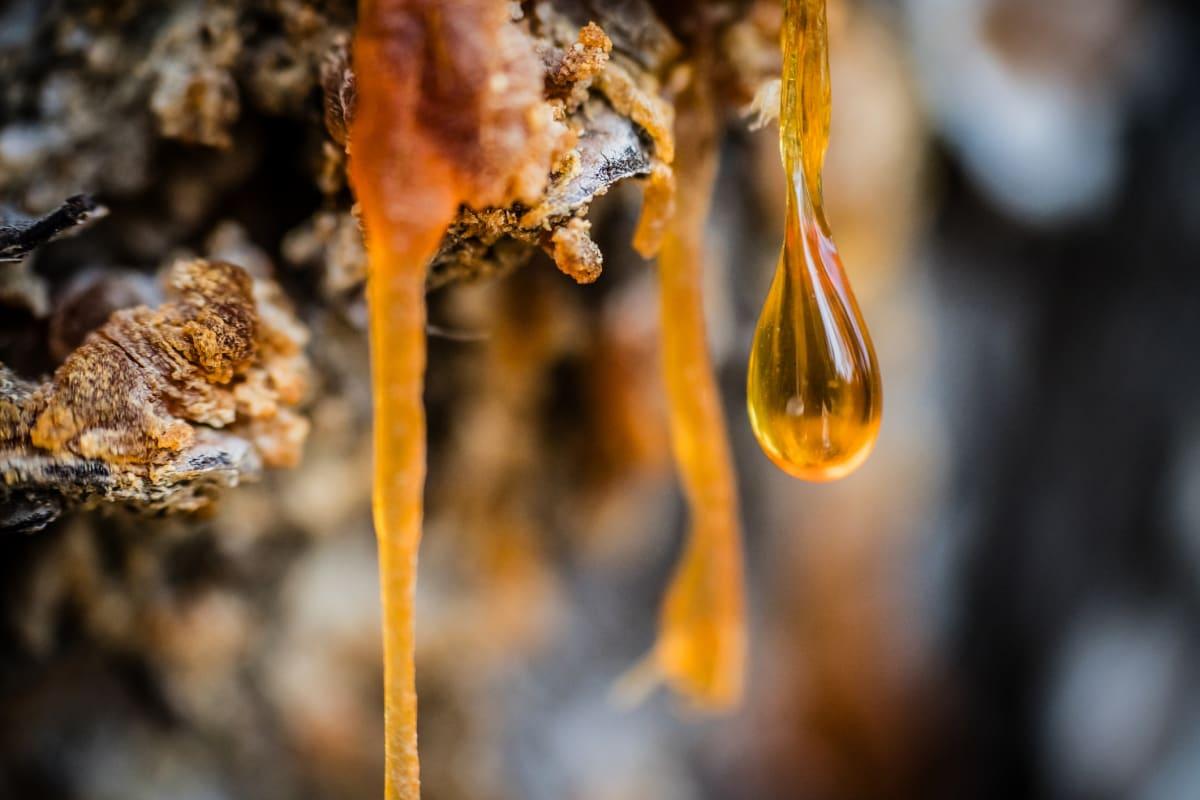
Honey-colored resin plopping from the forest trees soon to be hardened into amber stones
The amber pieces are little limpid windows into the past, unravelling the world at a time when flowering plants were just beginning to materialize on the planet. In the Ecuador quarry, particularly, the ambers belonged to monkey puzzle trees. Sepulchered within the crystalline golden amber fragments were the petrified corpses of at least six types of bugs. A baby snake from the present-day Myanmar, hell ants from what is today France, parasitic fungi, a fungus beetle, a rare type of fly, springtails, caddisflies, parasitoid wasps, a blood-sucking male midge, and even a wheel-shaped scrap of a spider’s web. Scientists referred to these remains as “bio-inclusions.”
The 60 amber chunks and the dead bodies frozen inside them revealed a wealth of tales from times gone by. For instance, it is clear that most of these bugs were bloodsuckers and likely sucked the blood of the dinosaurs that roamed there. Technically, their bodies should have the DNA of the dinosaurs they bit, but scientists believe that the chemicals in the tree’s resin interfered with the DNA and wiped away the DNA traces from the bugs’ bodies. No luck with that, but the disappointment was quickly surpassed with another fascinating story.
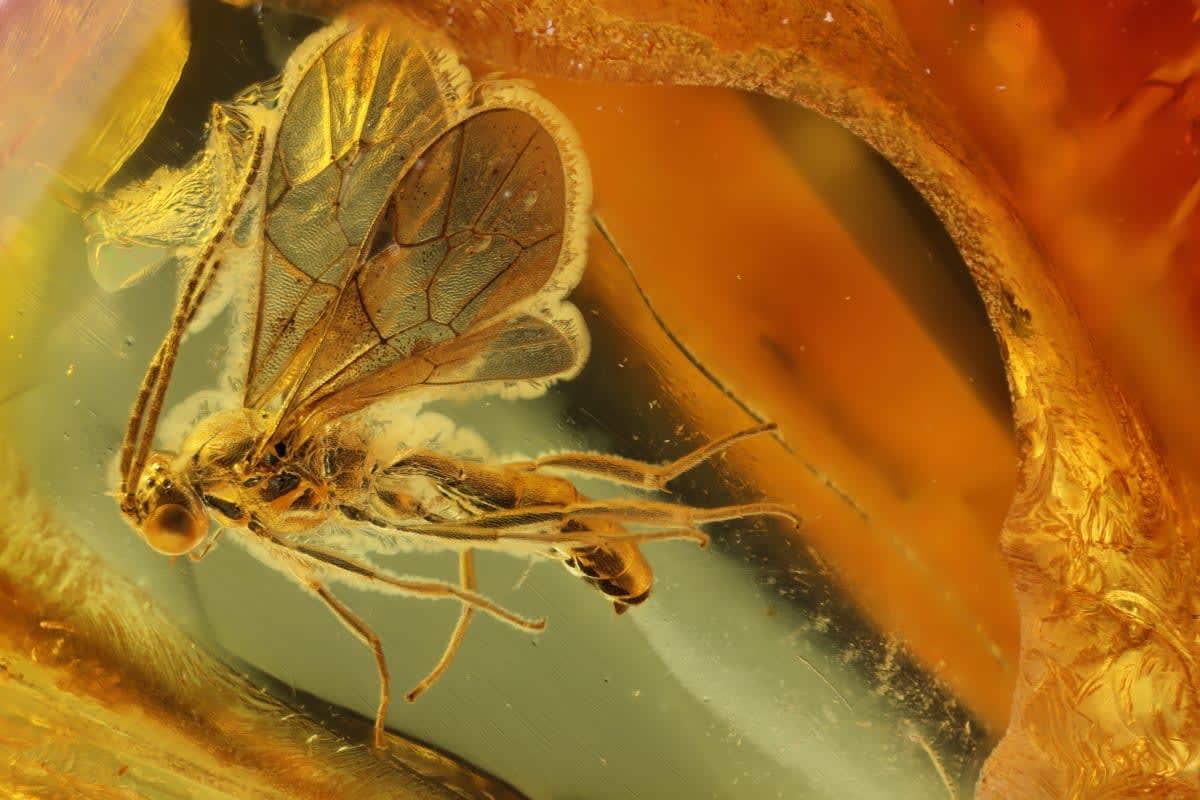
Dead wasp imprisoned inside amber
Entomologist David Grimaldi told CBS News that the location in question was once part of the southern supercontinent Gondwana. While most of the amber deposits were thought to reside in the Northern Hemisphere, this discovery jolted researchers like Grimaldi, in an enigma, as he said. The ambers, therefore, are pellucid time capsules that narrate the history of South America, preserving creatures so tiny and delicate that they may otherwise never fossilize, Delclòs reflected, according to Gizmodo. Adding to Reuters, he said that the outer structures carved by the sticky resin are so excellent that, under the microscope, the million-year-old bugs look like “freshly dead organisms.”
The discovery also illuminates that this was once a “humid, resinous forest ecosystem.” This also sheds some light on the intriguing relationship dinosaurs and insects were beginning to cultivate with the newly evolving flowering plants, a testimony of how nature maintains successful partnerships. Looking ahead, scientists will continue to study amber troves because, as Grimaldi described, “amber tends to preserve things that are tiny.”