
There's a Bizarre Road in France That Can Only Be Used Twice a Day — Then It Goes Underwater
Published March 12 2025, 12:47 p.m. ET

Representational image of a road in the middle of waterbodies
Researchers are coming across bridges and pathways submerged under the ocean due to rising sea levels, among other effects of nature. But a 2.58-mile long block of cobblestone called “Passage du Gois” in France is infamous because it can still be used twice a day, before going underwater for the rest of the time. This road makes a public appearance only twice a day for a few hours, and all of a sudden, the road vanishes under the wild waves, according to Interesting Engineering.
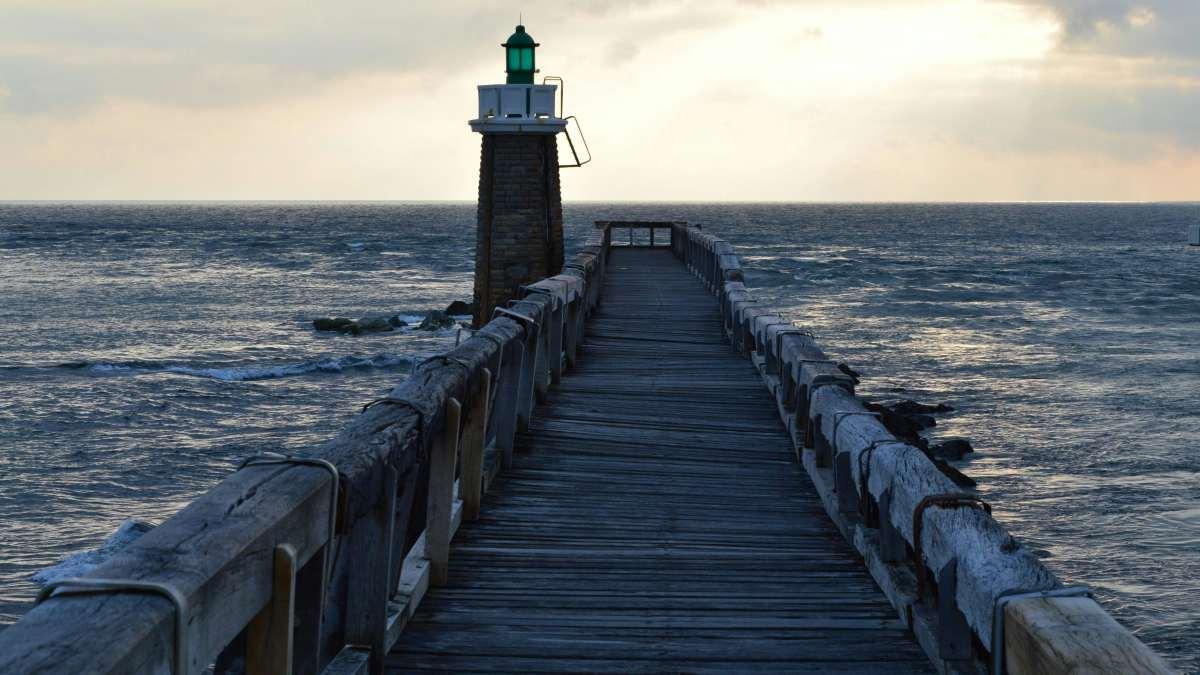
A road flanked by barricades and a lighthouse
Passage du Gois, also known as Gôa, located on the Atlantic coast of France, is a sandbank that links the Island of Noirmoutier with the mainland at Beauvoir-sur-Mer. The passage is only accessible when the tide is low, for around 3 hours, only one-and-a-half hours before the lowest tide and one-and-a-half hours afterward. The rest of the time, it is cloaked by the foamy rolls of 4 to 13-foot waves. Drivers can only travel it only twice a day. Aptly, the word "gois" comes from the 18th century word “goiser” which means “to get your feet wet while walking in water.”
Despite being considered an unsafe route for traveling, the road is pockmarked with rescue piles that can offer safety to people who might get trapped in the rising waters. The road is punctuated with “parrot masts” where stranded people can climb and take refuge until the tide dissolves, but the cars are not so lucky. Since they can’t climb the rescue towers like humans, the vehicles probably get washed away by the high tides. Even when the tides recede, they leave the road veneered with a soggy blanket of seaweed.
Still, the road attracts tons of tourists and curious travelers every day, specifically those who love to collect edible sea shells. The road is a bounty of these shells, which French people regularly use in their cuisine. The first time that someone used this road was in the 18th century. That was when the rescue towers were first built. In 1999, the passage was used for the Tour de France bicycle race on stage two. But owing to the slippery surface, racers fell and crashed, disrupting the event.
At present, the authorities have paved the road with several markers, side panels, safe cages, and lots of signs that travelers can use if they’re stuck in the rising tides. If crossing the passage is not possible, they can also use the Noirmoutier by using the bridge from Fromantine to visit the island. Today, the unusual submersible road also receives fishermen and walkers who explore their penchant for shore fishing. At the end of the day, Gois offers an unforgettable spectacle as marine currents from opposing sides meet and intersect, veiling the cobblestone from the gaze of onlookers and passersby.