
Scientists Recorded Audio in the Arctic for a Decade. The Results Flag a Hidden Crisis Underwater
Published Feb. 17 2026, 4:45 a.m. ET

Greenland Glacier
The Arctic has undergone a massive transformation in recent years. A recent study published in the journal npj Acoustics suggests that the Arctic’s soundscape is way louder and more diverse than previously believed. The revelation is crucial, as this kind of soundscape could put several animals at risk. The underwater sound data from Cambridge Bay in the Canadian Arctic spanned approximately ten years and revealed a link between the underwater soundscape and climate change. The most prominent sound sources in this period were large ships, aircraft, snowmobiles, and smaller vessels.
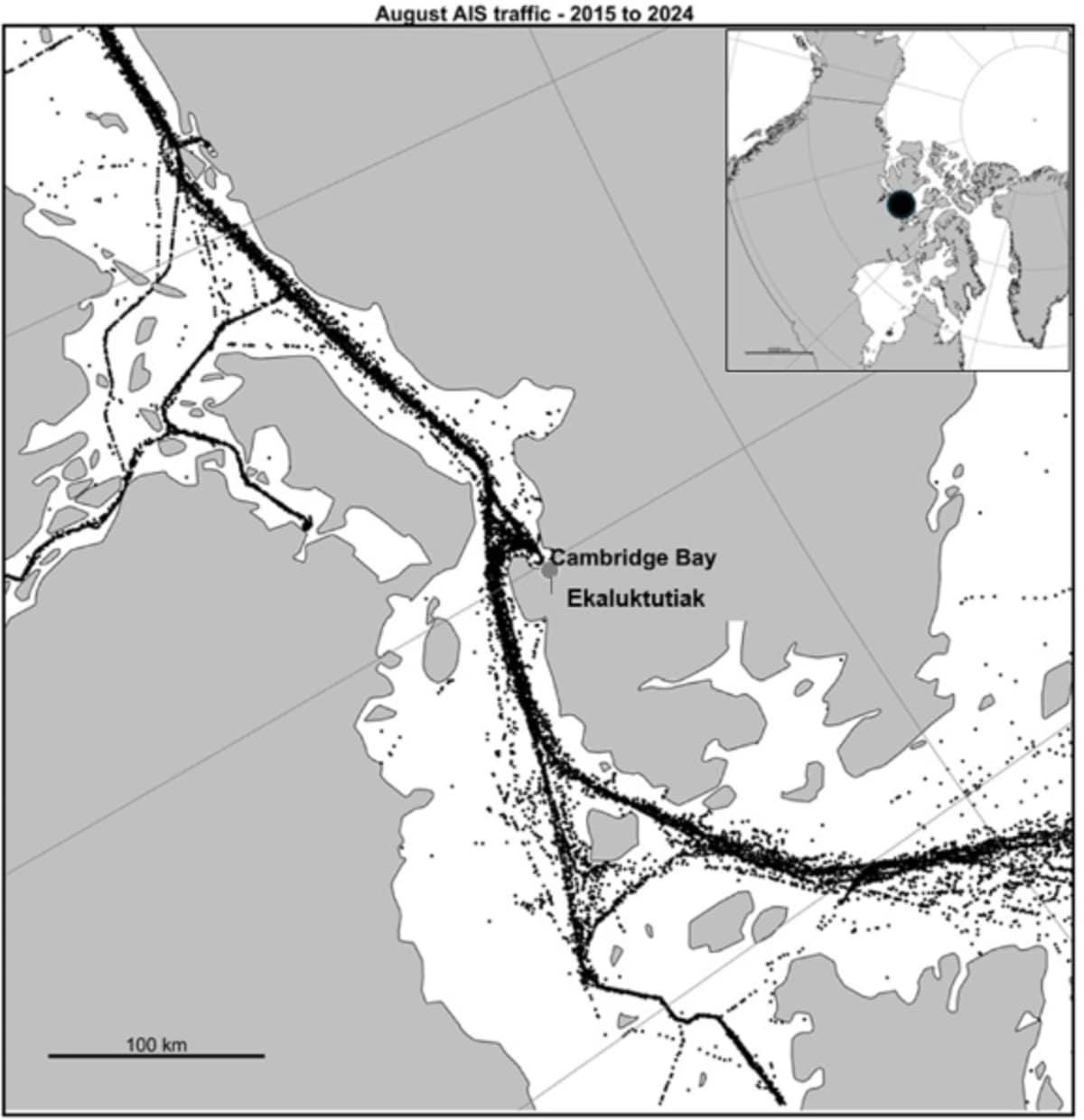
This map shows individual ship traffic information, provided by the Arctic Ship Traffic Database (ASTD) of the Arctic Council’s working group on Protection of the Marine Environment (PAME), using Automatic Identification Systems (AIS). AIS positions are recorded every six minutes, and the present map shows August traffic, cumulated from 2015 to 2024. The main shipping lane passes in front of Cambridge Bay, and there is regular traffic going into the bay itself.
Researchers were surprised by the findings, as the Arctic is popularly believed to be one of the quietest places on Earth. The revelations suggest that there is a need for a change in the way the Arctic is monitored. Researchers analyzed the decade-long data and determined that as climate change enhanced ice loss, the underwater soundscape became louder. “Climate change is amplified more than three times in the Arctic, which means the ice is melting faster, melting sooner and reforming later,” Dr Philippe Blondel, lead author of the study and senior lecturer in the Department of Physics at the University of Bath in the UK, shared, according to BBC Science Focus. “That makes the Arctic more open to human activities – it's easier for ships to travel when there is no ice. The key finding from our article is that ships make noise, but they are not the only ones making noise.”
The decade-long data reveal a steady increase in human-generated underwater noise in the Arctic, according to Eureka Alert. Researchers believe this could have major implications for wildlife and local communities. Arctic wildlife that depends on sound to navigate, communicate, hunt for food, and avoid predators would be the most affected. The involvement of man-made noise in such processes may push key species, like whales and seals, far away from their habitats. This would not only impact the sustenance of these creatures but also the balance of the entire ecosystem.
For local and indigenous communities, the man-made noises can hamper subsistence hunting and fishing. These noises disturb the animals, making them go on alert and, ultimately hard to hunt. Over the years, seasonal patterns have also become so unpredictable that communities can not entirely depend on them for their hunting and fishing pursuits. Considering the impact of these noises in the Arctic, they must be monitored with precision. Unfortunately, the equipment currently used is not doing the best job.
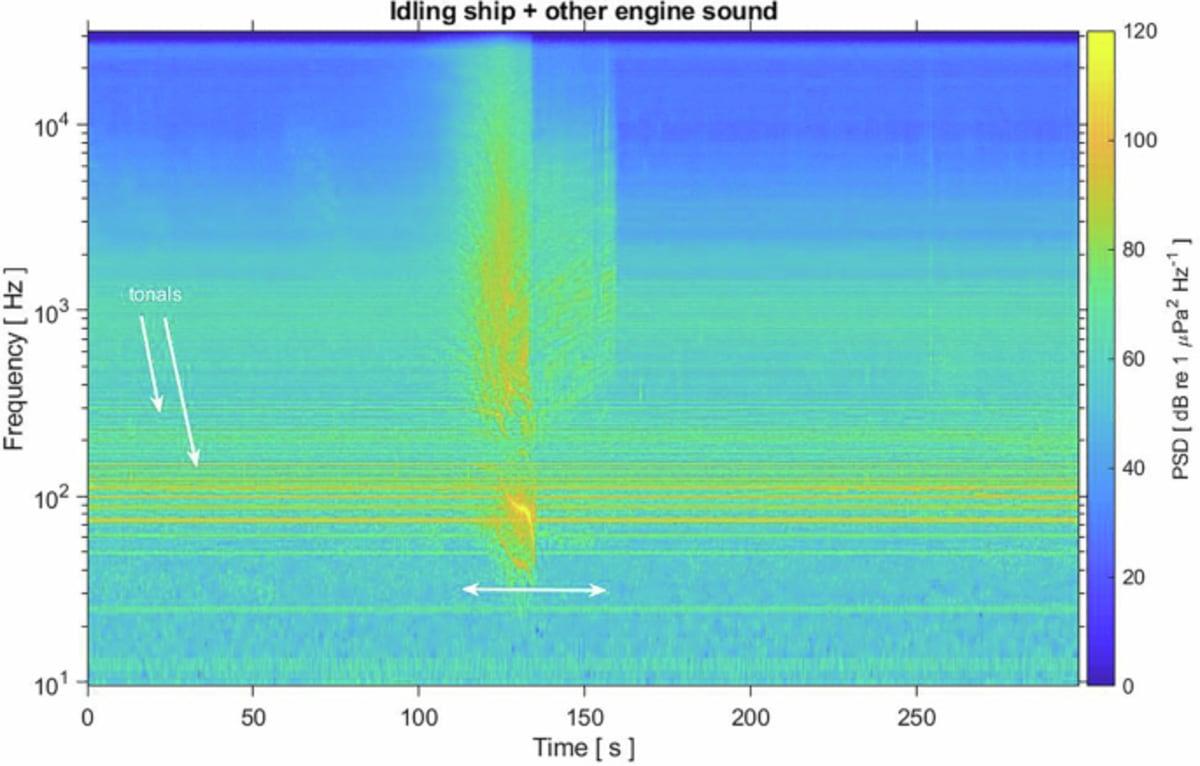
Spectrogram showing the combination of an idling ship and continuous engine sound
Most organizations depend on satellite tracking systems for their Arctic sound data. However, prominent sources, like large ships and aircraft, produce sound signatures at frequencies beyond the regulatory bands employed on these systems. These bands are applied by international bodies. Researchers argue that these bands are not apt to capture the growing diversity of vessels entering the rapidly changing Arctic. They added that the Arctic soundscape varied in accordance with the ice cover. Therefore, regulations applied to open European waters may not work for polar seas. The team thus requests that international organizations and authorities revise these bands for accurate measurement of noise levels in Arctic waters.
Researchers added that the measurement is necessary, as not all sounds in the soundscape need to be removed. “Some sounds, like the small fishing vessels used by locals, can have negligible impacts. Other manmade sounds are small compared to the loud background noise of ice melting or fracturing, or they do not affect the hearing of local animal species, meaning they too are acceptable. This is why we need to monitor sound in a range of frequencies along with the different impacts these sounds have depending on the season and ice cover,” Blondel explained. Through the data, experts will be able to target the menacing sounds that threaten the Arctic ecosystem.