
Are Polar Bears Actively Hunting Humans? Scientists Reveal Why Sightings Near Houses Have Increased
Published March 5 2026, 4:56 a.m. ET

In Inuit knowledge, a nanurliut is a giant bear that lives mostly at sea and rarely comes ashore.
In 2013, a woman in Churchill was returning from a Halloween party when she was almost ambushed by a polar bear until a stranger came for help. In the same year, a bear kept on pestering a glass studio inside which stood a filmmaker. In 2024, a worker on a remote Arctic radar station got mauled. A man “leapt” on a polar bear that was attacking his wife. A camper was bitten and dragged to the shore. A father in Arviat died protecting his children from a polar bear.
In the last decade, between 2013 and 2024, the BBC, The Guardian, and Conservation & Society reported many such incidents in which bears and humans clashed. In a recent report published in Arctic Science, researchers documented the case of Canada. With the arrival of summer, thousands of polar bears are clambering to the southernmost shores of Hudson Bay, some of them launching attacks on humans. The reason, however, is not simply food but something more depressing.
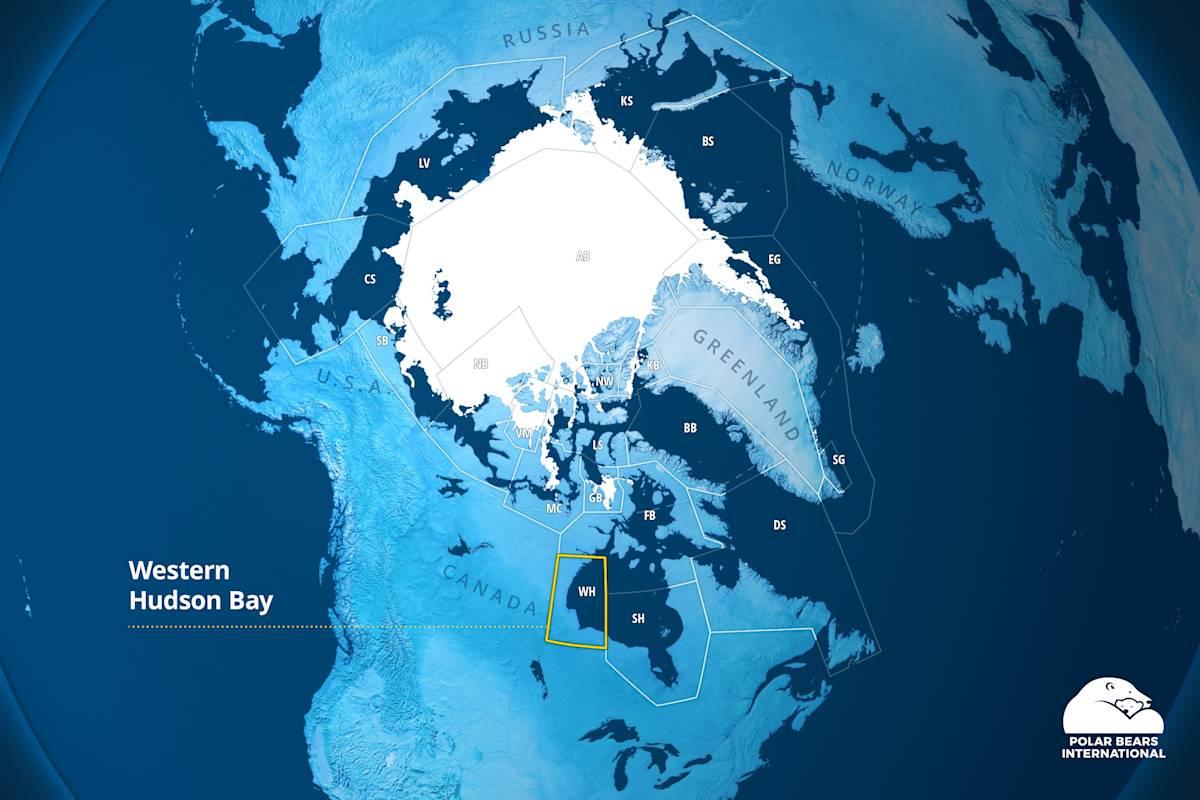
Map showing polar bear population in the Arctic.
Polar bears are generally non-aggressive towards humans. But lately, the interactions are turning into conflicts and even attacks. Polar bears are frequently observed bounding into the landfills, dumpsters, and junkyards, where they overturn the bins and litter the grounds. They break into buildings. Sometimes, they can be observed wandering on streets, stalking, and sniffing homes for food. Aromatic attractants like meat caches, campsites, cooking areas, and sled-dog yards also lure them with the reward of food. Officials have to reinforce bear patrols, fence in eco-lodges, use loud sirens, or tranquilize them with drugs to stop them from behaving this way. In this case, sadly, it is not their fault alone.
As the sea ice collapses due to climate change, their preferred food item, seals, especially ringed seals, are declining in numbers. As a consequence, they are forced to come to the shore to find another meal. Researchers contemplated different factors before arriving at this conclusion. None of the factors, such as poor body conditions or aggression, was found to influence the bears’ visitation rates, except one: sea ice.
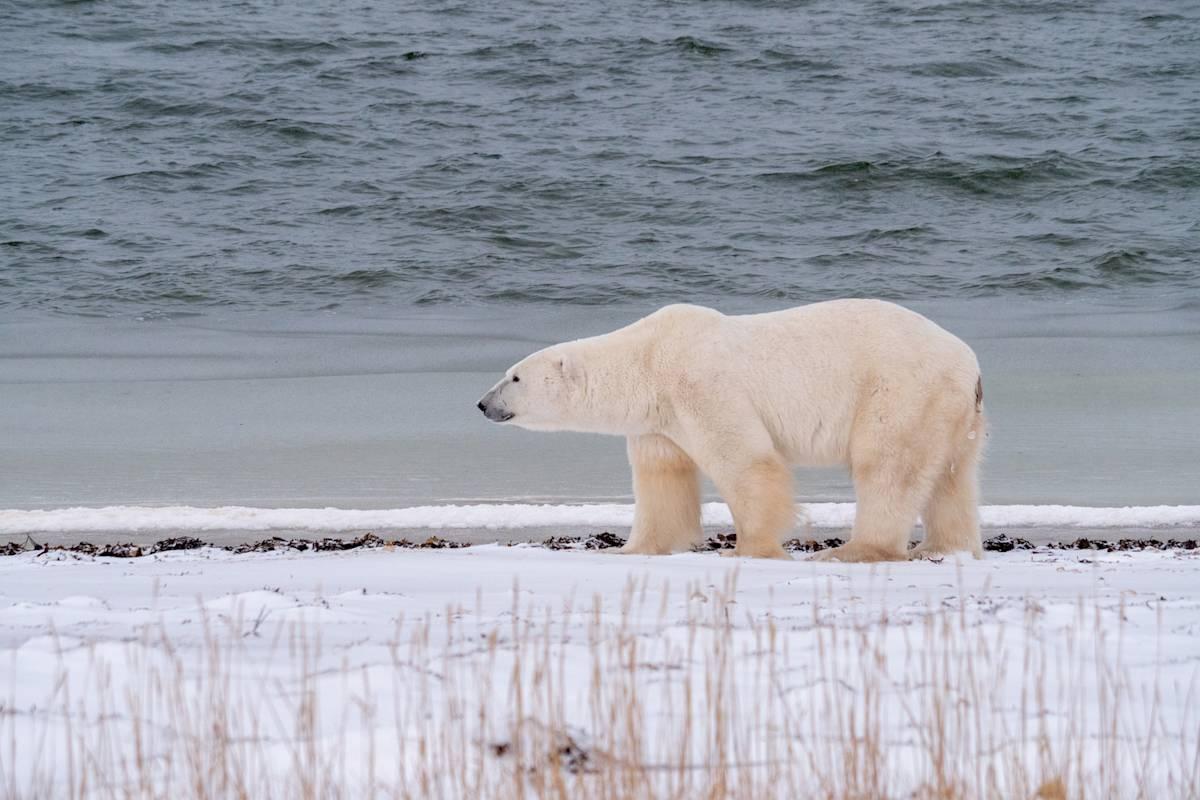
Polar bear standing on a snowy Arctic coastline.
The scenario is slightly different from three types of typical human-bear conflicts. One happens when the bear exhibits “stress-related or curious behavior,” causing the person to take extreme evasive action. In the second type, the bear makes “physical contact with a person,” and in the third type, the bear exhibits “clear predatory behavior.” Contrary to these scenarios, bears are currently not focused on hunting humans. Their sole focus remains on procuring the food supply.
Researchers from the University of Saskatchewan and University of Manitoba led an 11-year study, collecting information on bears’ movements, using remote camera traps. Data collection remains ongoing, but batteries and memory cards are replaced regularly for image extraction. The identities of bears were catalogued with several factors, including age, sex classification, fatness index, timing, and presence of visits. On the other side, the sea ice concentration was derived from satellite observations and NASA algorithms. Loss of sea ice emerged as the dominant cause behind their shore visits.
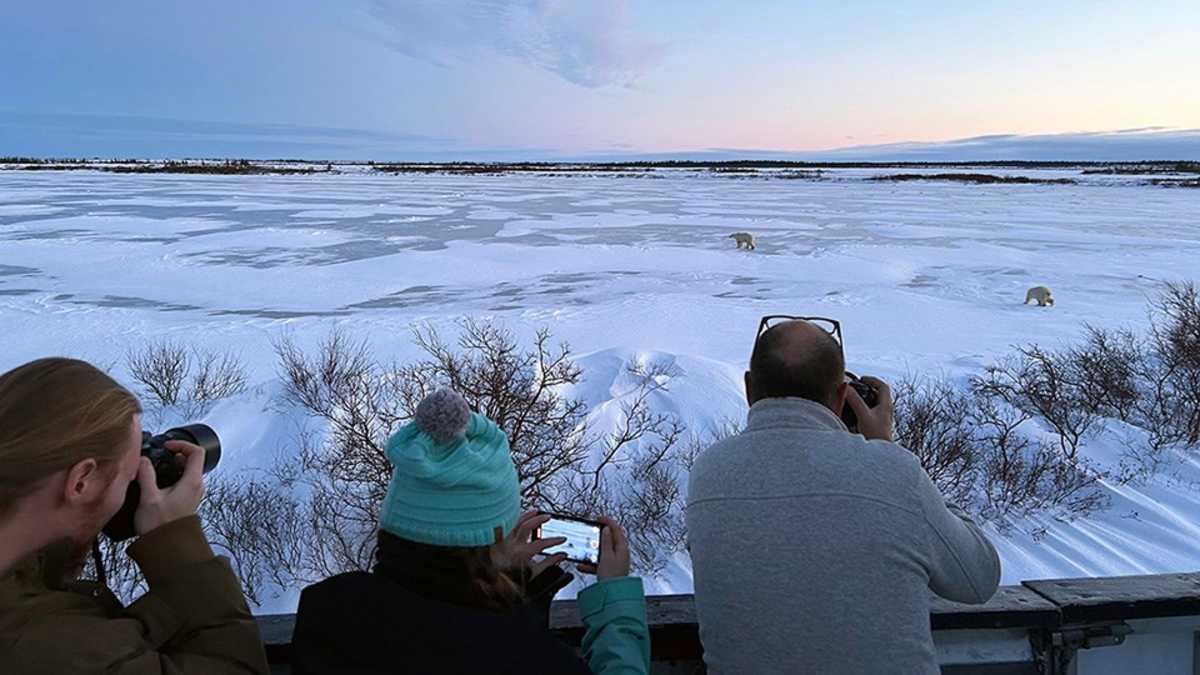
During their week in Churchill, participants witnessed polar bears resting along the shore, sparring, and feeding as they waited for sea ice to form.
“If you have a year with less sea ice, you’re going to have more bears on shore for longer, you’re going to be more likely to see these visits,” study author Alex Crawford shared with CTV News. Co-author Douglas Clark shared with CBC that he first started monitoring these bears 15 years ago, installing trail cameras across several locations in Manitoba. He also spent two weeks in Churchill guiding two groups of participants through a 'Learning Vacation,' watching polar bears as they waited for sea ice to form.
Kasey Ryan, a conservationist from Assiniboine Park Zoo, emphasized the importance of protecting the denning habitats of these vulnerable animals. Between February 27 and March 1, the park celebrated “Polar Bear Weekend,” offering visitors breakfast with the bears, polar bear yoga, and other activities, hoping that people would gain new insights and develop compassion for these Arctic dwellers.